Blog · buying-group
How big is a B2B buying group? At €25k+, map 10 or more
A B2B buying group has 10–13 people inside the buyer and about 22 with outside advisers. At €25k+, map at least 10 and more as deals grow, with one message.
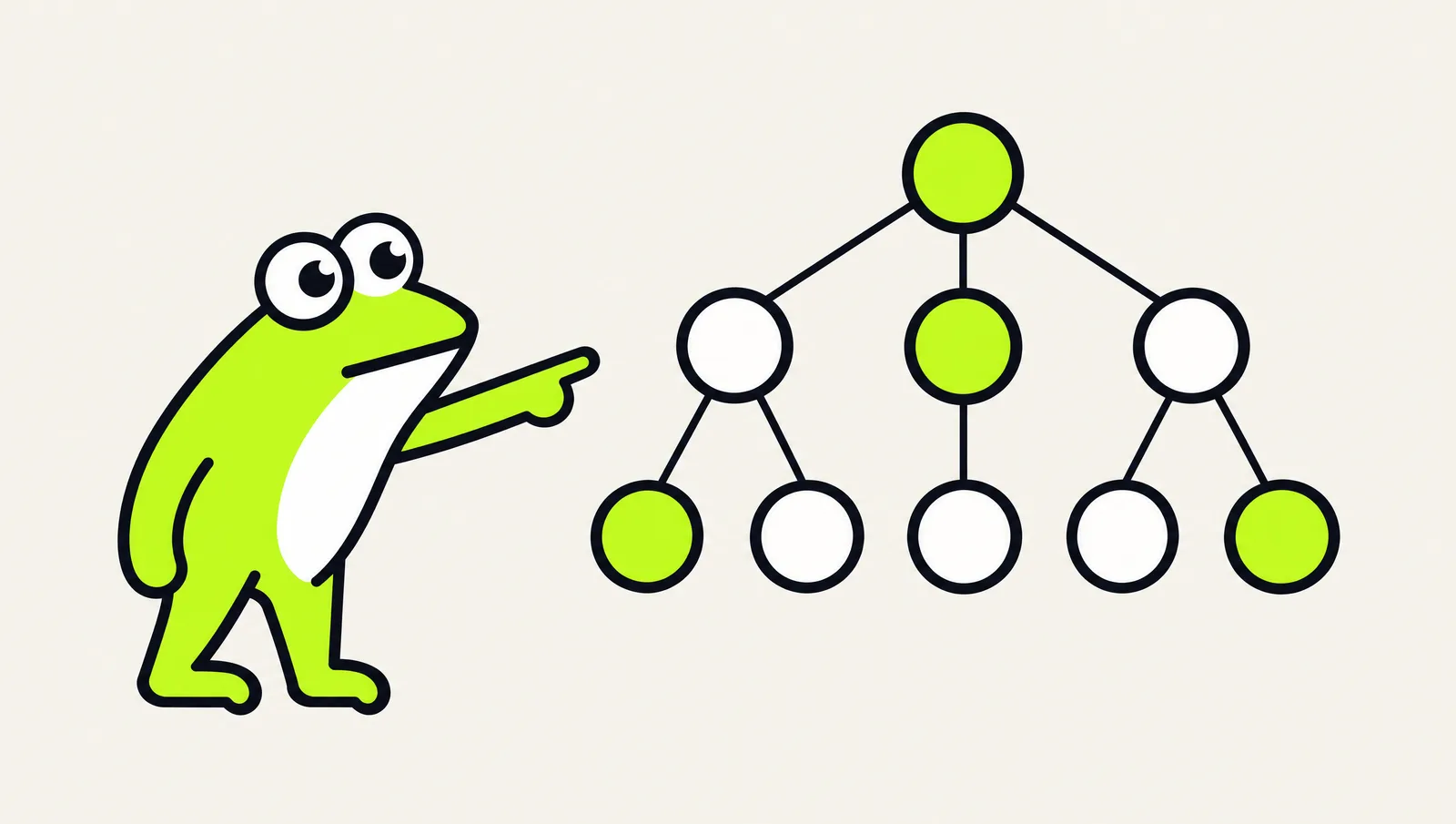
people inside and outside the buyer's organisation in a typical purchase decision
Forrester, 2026Map at least 10 named people per deal if you sell at €25k or more, and more as deal value rises. That rule is our reading of the published studies, which disagree because they count different things.
How many people are in a B2B buying group?
A typical B2B buying group has 10–13 people inside the buying company, and about 22 once outside advisers are counted, more for complex or strategic purchases.↗↗↗ Our planning rule for €25k+ deals starts at the bottom of that spread and rises with deal value. The spread in published figures comes from what each study counts:
- Gartner puts groups at 5–16 people across as many as 4 functions.↗
- 6sense finds the typical group has around 10 members.↗
- Forrester (2024) counts 13 people inside the buying organisation, with 89% of purchases involving 2 or more departments.↗
- Forrester (2026) adds 9 external influencers to 13 internal stakeholders, and says the number rises for complex or strategic purchases.↗
- Gong counts something else again: contacts on won deals in its customers' data. Won large strategic deals averaged 17.↗
Buying-group counts run from 5 to 22 people because each study counts something different.
Data behind this chart
| Item | Value |
|---|---|
| 6sense: typical group, all members | 10people |
| Forrester 2024: people inside the buyer | 13people |
| Gartner: top of its 5–16 range, up to 4 functions | 16people |
| Gong: contacts in won large strategic deals | 17people |
| Forrester 2026: 13 inside + 9 outside influencers | 22people |
Two things push a group towards the top of these ranges. The first is the shortlist. 6sense found that shortlist length alone explains nearly 45% of the variation in group size.↗ More vendors under review means more people checking them.
The second is deal value. In a Gong Labs study of 10,332 deals, the number of buyers in closed-won deals rose with deal value, from a handful on the smallest deals to about 25 at $200k.↗ At the chart's labelled points, about 5 buyers sat near $25k, 10 near $40k, 15 near $125k and 20 near $150k.↗ Deal size decides the design, and it decides the size of the room too.
So what should a €25k+ seller plan for? Gong's chart counts the buyers involved in the deal, and at €25k it runs below the buyer surveys. We plan for the whole group, including people who never join a call. So map at least 10 named people on any deal of €25k or more, the typical group size 6sense reports.↗ Then move up with deal value, to about 15 near €125k and 20–25 from €150k, in line with Gong's won deals.↗ Gong reports in dollars, and we use the same numbers in euros as a rough guide. This is our planning rule, and it goes further than any one study measured. Move up faster when the shortlist is long or 3 or more departments are involved.
Which roles belong on a buying-group map?
A buying-group map needs the 5 roles 6sense names: ultimate decision maker, champion, influencer, financial ratifier and purchasing or procurement.↗ A champion, in their definition, pushes for the purchase and rallies support across the group.
Procurement is often added too late. Forrester found procurement professionals are decision-makers in 53% of buying cycles and engage from the start.↗ If your map adds them at contract stage, you're late in about half of all buying cycles.↗
The group also reaches well beyond the team that will use what you sell. About 40% of members come from outside the end-user department.↗ And 73% of purchases involve 3 or more departments.↗ Then there are the 9 outside influencers in Forrester's count.↗ Think consultants, analysts and peers at other companies, who never appear in your CRM.
Record where each person stands as well as their role: supporter, neutral, against or unknown. The person most likely to stop the deal is often missing from the role list. Look for IT security, legal, the data protection officer or, in Germany, the works council if your product can monitor employees.
| Role | What they do | Owner on your side | Proof they need |
|---|---|---|---|
| Ultimate decision maker | Makes the final call and selects the vendor | Account executive, with a sales leader | The problem, its cost and the decision on one page |
| Champion | Pushes for the purchase and rallies support | Account executive | Material they can reuse in internal meetings |
| Influencer | Shapes the evaluation, without final sign-off | Solutions engineer | Technical fit, workflow and integration |
| Financial ratifier | Checks the purchase fits budget and financial policy | Sales leader | Payback maths in their own numbers |
| Procurement | Manages contracts, terms and compliance; a decision-maker in 53% of cycles | Whoever owns contracts on your side | Terms, security answers and references, early |
| Also on the map: people outside the end-user department | About 40% of members; check the impact on their own team | Owner of the nearest role | What changes for their team |
| Also on the map: outside influencers | Consultants, analysts and peers who advise the group | Account executive | Public proof they can find and check |
| Also on the map: possible blockers | IT security, legal, the data protection officer or a works council; can stop the deal | Solutions engineer or contracts owner | Security, data protection and legal answers in writing |
Why do single-threaded deals stall?
Single-threaded deals stall because one contact can't carry a decision that around 10 people make.↗ Multi-threading means building a working relationship with several people in the buying group instead of relying on one. When your only contact goes quiet, changes jobs or loses an internal argument, the deal has no one else to speak for it.
Gong's analysis of 1.8M deals found 77% were multi-threaded, yet won deals had twice as many buyer contacts as lost ones.↗ On deals over $50k, multi-threaded deals had win rates 130% higher on average.↗ Ebsta and Pavilion's analysis of 655,000 opportunities found win rates rose 55% when decision-makers were actively involved in the first 2 stages of the sale.↗ These are correlations from vendor platforms: winning deals attract more people, as well as the other way round. The direction is still clear enough to act on.
A large group is not the problem in itself. Forrester found 94% of buyers in groups of 6 or more report clear benefits, including a better ability to secure budget.↗ Buyers see the bigger group as the route to budget approval, even though Gartner finds most groups argue on the way there.↗ Your job is to be known to the whole group and help it agree.
So the bar isn't “more than one contact”. Most deals clear that already. The bar is an engaged person in each role, in line with the planning number for your deal size.
More contacts only help if the group agrees
Adding contacts helps only when those people move towards the same decision, and most groups struggle to. Gartner found 74% of B2B buying teams show unhealthy conflict during the decision.↗ In the same survey of 632 buyers, groups that reached consensus were 2.5× more likely to report a high-quality deal.↗
Most multi-threading guides already say “keep one narrative”. Gartner's data shows why that matters more than tailoring for each persona. Content focused on individual relevance had a 59% negative impact on buying-group consensus.↗ Buyers who saw relevance to the group as a whole were 3× more likely to report a high-quality deal.↗
Give 5 people 5 different stories and they will argue in the meeting you're not in. The practical rule:
- Keep one story for the whole group: the problem, what it costs and the decision in front of them
- Change only the proof per role: payback maths for the financial ratifier, the security review for IT, the daily workflow for the users, terms and references for procurement
- Put the proof where the whole group can see it: one shared business case or mutual action plan with a section per role, sent to every stakeholder, instead of separate private packs. Each person sees the others' concerns answered, and that builds agreement
- Test it with one sentence: each person should be able to repeat the same reason to buy in their own words
How do you map and multi-thread an account?
Map and multi-thread an account in 7 steps, from a contact target to a weekly review. Set the target by deal size, map the 5 roles and the gaps, get introduced to the missing people, give each role an owner on your side, write one message for the whole group, bring procurement in early and review coverage every week.
- 01Step 1
Set a contact target by deal size
Map at least 10 named people at €25k or more. Move towards 15 near €125k and 20–25 from €150k, and faster when the shortlist is long.
- 02Step 2
Map the roles and the gaps
For each of the 5 roles, plus people outside the end-user department, outside advisers and possible blockers, write a name or “unknown”. Note where each person stands.
- 03Step 3
Get introduced to the missing people
Ask your champion who else must be comfortable, who could stop it and who signs off. Ask for a group session, and offer a peer for each role.
- 04Step 4
Give each role an owner on your side
Account executive, solutions engineer, sales leader or contracts owner. One name per role; leaders and engineers only above your team-selling threshold.
- 05Step 5
Write one message for the whole group
The problem, what it costs and the decision, in one shared document. Add a section of proof per role; don't send private packs.
- 06Step 6
Bring procurement in early
Ask who runs the purchase in the first meeting. Send terms and security answers before they are requested.
- 07Step 7
Review coverage every week
In the pipeline meeting, check each deal against its target and its empty roles for its stage. Name who fills each gap.
Step 2 turns an org chart into a gap list: for each of the 5 roles, a named person or an honest “unknown”. Step 3 is how you fill it. Ask your champion three questions in the second meeting: who else has to be comfortable for this to go ahead, who could stop it and who signs off on budget and terms? Then ask them to set up a 30-minute group session, or a joint review of the shared business case, with those people. Offer a peer for each role, such as your solutions engineer for their IT lead or your sales leader for their finance lead, instead of asking for contact details. Record each introduction on the deal in the CRM.
Step 5 is where Gartner's finding bites. Write the group message first, then add a section of proof per role in the shared document. Don't start from 5 persona emails and hope they add up.
Mapping is not permission to email. Build the map from your conversations, your champion's introductions and public information about job roles. If you add people found through data tools, record your legitimate-interest assessment and tell them where you got their details, as GDPR Article 14 requires. In Germany, advertising email generally needs prior consent, B2B included (UWG §7), so ask for an introduction instead.
Keep the map in the CRM, where the whole team can see it. In Salesforce, use Opportunity Contact Roles and map the 5 roles to the Role picklist. Counting them per deal takes a report or a small Flow, because contact roles don't roll up to the opportunity natively. In HubSpot, use deal-to-contact association labels, which need a Professional or Enterprise subscription, and build a deal report filtered on label.
How do you know if a deal has enough threads?
A deal has enough threads when its named contacts meet the planning number for its size and each of the 5 roles has at least one engaged contact. Engaged means a two-way interaction, such as a reply or a meeting attended, in the last 30 days, or 14 days for deals in late stage. Test every open deal above your deal-size threshold. A deal with an empty core role is under-covered, however many contacts it has.
Judge early deals by stage, or every deal in discovery will fail the test. By the end of discovery, you need the champion, the decision maker and one more. By evaluation, all 5 roles are named. Before proposal, procurement and the financial ratifier are engaged, and the contact count meets the planning number for the deal size.
- By the end of discovery: champion, decision maker and one more are named
- By evaluation: all 5 roles are named
- Before proposal: named contacts meet the planning number for the deal size
- The decision maker is engaged: a reply or a meeting in the last 30 days (14 in late stage)
- Before proposal: the financial ratifier and procurement are engaged, and procurement knows your timeline
- At least one person outside the end-user department is engaged
- Each contact's stance is recorded: supporter, neutral, against or unknown
- Every role has an owner on your side
- The proof for every role sits in one shared business case, sent to the whole group
Coverage has a seller side too. In Gong Labs' data, deals with one more colleague from the seller's side had double the win rate.↗ Gong's 2025 analysis of 1.8M deals found selling teams on won deals were 67% larger than on lost deals.↗ Give each role an owner on your side: the account executive with the decision maker and champion, a solutions engineer with technical influencers, a sales leader with the financial ratifier and someone who knows contracts with procurement.
Reserve sales-leader and solutions-engineer ownership for deals above your team-selling threshold, for example the top 20% of open pipeline by value or deals above €100k. Below it, the account executive owns every role and the weekly review checks only the gaps.
Review coverage weekly in the pipeline meeting, deal by deal. Ask one question per deal: which role has no named person, and who on our side owns filling it by Friday?

In practice
How we do it at panelhop
We measure coverage as a number. In a Panel Check (our 2–3 week GTM audit), one of the 32 checks counts the engaged contacts per target account over the last 90 days and whether their roles are mapped against a template. You get your own baseline and a planning number for your deal size.
Signal Desk (in-market accounts, weekly) puts scored accounts in your CRM with the buying group mapped by role, from your CRM and verified business data that is lawful for each contact's country: who we found, who is missing and a brief your rep can act on the same day. In Leak Fix (we build the fixes), we set up a role map per tier and coverage tracking per account in your HubSpot or Salesforce. In Panel Ops (we run it monthly), we report buying-group coverage on your top open deals. See what each service covers
Questions buyers ask about this
Does a bigger buying group make a deal harder to win?
Not by itself. Forrester found that 94% of buyers in groups of 6 or more report clear benefits, including a better ability to secure budget. The risk is disagreement, which Gartner found in 74% of buying teams.
When should procurement come into the deal?
At the start. Forrester found procurement is a decision-maker in 53% of buying cycles and engages from the beginning of the process. Put procurement on your first map, because adding them at contract stage is too late in about half of buying cycles.
Should I personalise outreach for each stakeholder?
Personalise the proof, not the story. Gartner found content focused on individual relevance had a 59% negative impact on consensus, while buyers who saw relevance to the whole group were 3× more likely to report a high-quality deal.
How many contacts does a €25k deal need?
Map at least 10 named people, with at least one in each of the 5 roles. That is panelhop's planning rule, built on 6sense's typical group of about 10; in Gong Labs' data, won deals near $25k involved about 5 buyers, so expect to engage fewer people than you map. Move up as deal size and the vendor shortlist grow.
How do I track multi-threading in the CRM?
Give every contact on a deal a role, then count engaged contacts per role, where engaged means a reply or a meeting attended in the last 30 days (14 in late stage). Use Opportunity Contact Roles in Salesforce, or deal-to-contact association labels in HubSpot Professional or Enterprise. Flag any deal where a core role is empty.